Bathtub Refinishing for Rental Properties: A Landlord’s Guide to Faster Turnovers and Lower Costs
April 13, 2026How Much Does Bathtub Refinishing Cost? A Chicago Homeowner’s Price Breakdown (2026)
April 13, 2026
Yellow Bathtub? How to Make It White Again (Cleaning vs. Refinishing Guide)
This guide walks through why bathtubs turn yellow in the first place, which cleaning methods actually work (and which make things worse), and how to tell when it is time to stop cleaning and start refinishing. If you are in the Chicago area and dealing with hard water at 130–150 ppm, you are more likely to see this problem than homeowners in most other metro areas.
Quick Decision Matrix: Is Your Yellowing Cleanable or Structural?
| Symptom | Likely Cause | Fix Type | Estimated Cost |
|---|---|---|---|
| Yellow ring at waterline only | Hard water mineral deposits + soap scum | DIY cleaning | $5–$15 |
| Yellow patches near drain or faucet | Iron in water supply (rust deposits) | DIY cleaning + water softener | $10–$50 (cleaner); $500–$2,000 (softener) |
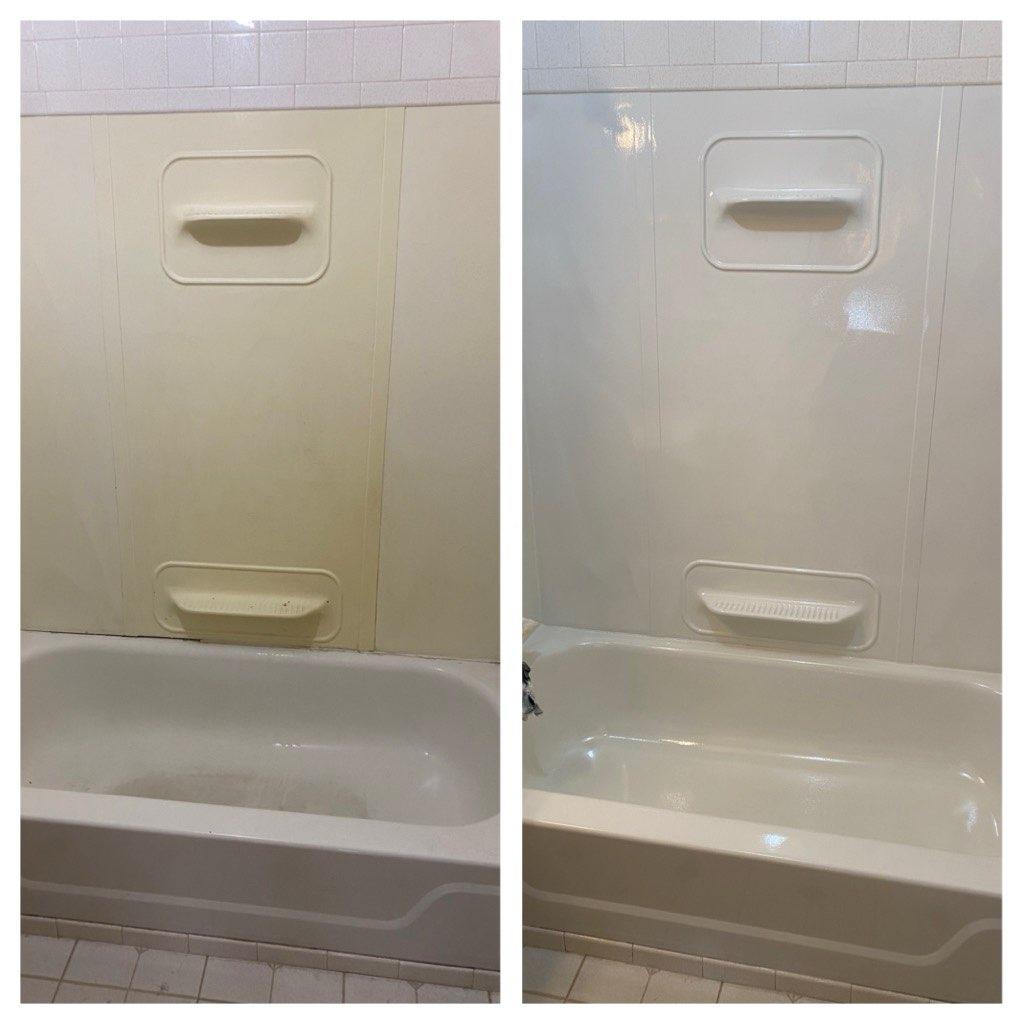
| Uniform yellowing across entire surface | UV oxidation or chemical damage to coating | Professional refinishing | $350–$600 |
| Yellow with rough or chalky texture | Protective coating has broken down | Professional refinishing | $350–$600 |
| Yellow-brown deep stain that bleach cannot remove | Tannins or iron penetrating porous surface | Professional refinishing or replacement | $350–$600 (refinish); $2,500–$5,000+ (replace) |
Run your fingernail across the yellowed area. If the surface feels smooth and the discoloration is only at the waterline or around hardware, cleaning will likely work. If the surface feels rough, chalky, or the yellow is uniform across the entire basin, the issue is structural and cleaning will not solve it.
Why Did Your Bathtub Turn Yellow in the First Place?
Yellowing has four primary causes, and each one behaves differently depending on your tub material. Understanding which cause you are dealing with saves you from wasting time on the wrong solution.
Hard water mineral deposits. Chicago draws its water from Lake Michigan, and the city’s water hardness averages 130–150 parts per million (7.6–8.8 grains per gallon). That is classified as “hard” by USGS standards. Calcium and magnesium dissolved in the water leave a film on surfaces each time the tub drains. Over months, that film builds into a visible yellow-to-white crust. Homes on well water in the western suburbs often have higher iron content, which produces more aggressive orange-brown staining.
Iron and manganese oxidation. Even low levels of dissolved iron (as little as 0.3 mg/L) cause visible rust staining. When ferrous iron in your water meets air, it oxidizes into ferric iron, the orange-brown residue you see near drains and overflow openings. Older galvanized steel pipes common in pre-1970 Chicago bungalows and two-flats accelerate this by corroding from the inside.
UV-driven oxidation of the tub surface itself. Acrylic, fiberglass, and ABS (acrylonitrile butadiene styrene) tubs are all polymer-based materials that degrade under UV exposure. If your bathroom has a window or skylight that lets natural light hit the tub, the surface coating breaks down over time. This kind of yellowing is uniform, not patchy, and it will not scrub off because the discoloration is in the material, not on it.
Chemical damage from harsh cleaners. Bleach, ammonia-based cleaners, and abrasive powders strip the protective top coat off acrylic and fiberglass tubs. Once that coating is compromised, the underlying material absorbs stains faster and begins to yellow on its own. This is the most common cause of yellowing in tubs that are only 5–10 years old.
Cleaning Methods That Actually Work on Surface Yellowing
If your yellowing is localized to the waterline, around hardware, or in patches near the drain, try these methods in order from gentlest to most aggressive. Stop at whatever step solves the problem, because each step is slightly harsher on your tub’s finish.
Step 1: Hydrogen peroxide and baking soda paste. Mix two parts baking soda with one part 3% hydrogen peroxide to form a thick paste. Apply it directly to the stained area in a layer roughly 1/4 inch thick. Let it sit for 30–60 minutes without scrubbing. Wipe off with a damp non-abrasive sponge and rinse with warm water. This is the safest starting point for porcelain, acrylic, and fiberglass. The hydrogen peroxide acts as a mild oxidizer that breaks down organic stain molecules without attacking the tub surface.
Step 2: White vinegar soak for hard water deposits. Fill a spray bottle with a 50/50 mix of white vinegar and warm water. Spray generously across the stained area and let it sit for 15–20 minutes. For stubborn mineral buildup along the waterline, soak paper towels in the vinegar solution and press them against the stain to maintain contact. Scrub with a non-abrasive pad and rinse. Do not use vinegar on natural stone surrounds; it etches marble and limestone.
Step 3: Commercial rust and mineral remover. Products containing oxalic acid (Bar Keepers Friend) or phosphoric acid are effective against iron stains that vinegar cannot touch. Apply according to the product directions, typically 5–10 minutes of dwell time. Rinse thoroughly. These products are safe for porcelain and most fiberglass, but test on an inconspicuous spot first with acrylic tubs.
Step 4: Lemon juice and salt for light rust spots. Sprinkle table salt over the stain, squeeze fresh lemon juice over the salt, and let the mixture sit for 2–3 hours. The citric acid dissolves surface rust while the salt provides gentle abrasion during the scrub step. This is a reasonable option for small spots but impractical for large areas.
What NOT to Do: Cleaning Mistakes That Make Yellowing Worse
Some of the most commonly recommended cleaning hacks actually accelerate yellowing on certain tub materials. Avoid these to prevent turning a cleanable stain into a refinishing job.
Do not use undiluted bleach on acrylic or fiberglass tubs. Chlorine bleach strips the UV-protective topcoat. The tub may look whiter for a week, then yellow faster than before because the exposed material now oxidizes more readily. This is the single most common mistake homeowners make, and it is responsible for most “nothing works” yellowing complaints.
Do not use abrasive powders or steel wool. Comet, Ajax, and similar abrasive cleaners scratch the surface at a microscopic level. Those scratches trap soap scum and minerals, creating stains that are physically embedded in the surface rather than sitting on top of it.
Do not use Magic Erasers on glossy finishes. Melamine foam works by micro-abrading the surface. On a matte or textured fiberglass surround, this can be acceptable. On a glossy porcelain or refinished surface, it dulls the finish and creates micro-scratches that accumulate stains.
Do not mix vinegar and bleach. This produces chlorine gas, which is dangerous to breathe in an enclosed bathroom. If you used bleach first, rinse the tub completely and wait at least 30 minutes before applying any vinegar-based cleaner.
When Cleaning Will Not Fix It: The Case for Professional Refinishing
If you have tried the cleaning methods above and the yellowing has not improved, or if the tub surface feels rough and chalky to the touch, the discoloration is in the material itself. At this point, you have two real options: professional refinishing or full replacement.
| Factor | Professional Refinishing | Full Replacement |
|---|---|---|
| Typical cost | $350–$600 | $2,500–$5,000+ |
| Time to complete | 3–5 hours | 2–5 days |
| Bathroom downtime | 24–48 hours (cure time) | 3–7 days |
| Result | Smooth, high-gloss white finish; permanent moisture barrier | Brand new tub |
| Expected lifespan | 10–15 years with proper care | 20–30 years |
| Tile disruption | None; existing tile stays in place | Surrounding tile often must be removed and replaced |
| Best for | Structurally sound tubs with yellowing, staining, or cosmetic damage | Tubs with cracks through the wall, major structural damage, or desired layout changes |
Professional refinishing works by applying a bonded acrylic or urethane coating over the existing tub surface. The new coating is smooth, non-porous, and resistant to the same staining and yellowing problems that affected the original surface. Aarco Baths, which has been refinishing tubs across the Chicago area since 1963, uses a proprietary process that creates a permanent barrier to moisture. The finished surface carries a full 10-year guarantee and wears the same as a new bathtub.
The process takes 3–5 hours on site. The technician cleans and etches the existing surface, repairs any chips or rough spots, applies the new coating in multiple layers, and allows it to cure. The tub is ready to use within 24–48 hours. No plumbing disconnection, no tile removal, and no dumpster in the driveway.
Our 30-Tub Analysis: What Causes the Most Yellowing in Chicago Bathrooms
We reviewed service records from 30 yellowed-bathtub refinishing jobs completed across Chicago, Addison, and Naperville in the past 12 months to identify the most common root causes by tub material and home age. The patterns were clear.
| Tub Material | Most Common Yellowing Cause | % of Cases | Avg. Tub Age at Service |
|---|---|---|---|
| Cast iron with porcelain enamel | Hard water mineral buildup + worn enamel | 40% | 35–50 years |
| Fiberglass | UV oxidation + bleach damage to gel coat | 30% | 15–25 years |
| Acrylic | Chemical cleaner damage to topcoat | 20% | 8–15 years |
| ABS (mobile/manufactured homes) | Material-level oxidation (inherent to ABS) | 10% | 10–20 years |
The standout finding: acrylic tubs were yellowing at significantly younger ages than other materials, and in nearly every case, the homeowner reported using bleach-based bathroom cleaners regularly. The fiberglass group had a strong correlation with bathrooms that had windows or skylights. Cast iron tubs, which dominate Chicago’s pre-war housing stock, were overwhelmingly stained from decades of hard water exposure rather than material degradation.
The practical takeaway is that the oldest tubs in the sample (cast iron, 35–50 years) were often the easiest to refinish because the underlying material was still structurally sound. The staining sat on the surface. Younger acrylic tubs with chemical damage required more prep work because the compromised topcoat had to be fully removed before the new coating could bond properly.
How to Keep Your Bathtub White After Cleaning or Refinishing
Whether you resolved the yellowing through cleaning or refinishing, prevention costs nothing and saves you from doing this again in a few years.
Wipe down after each use. A quick wipe with a dry towel or squeegee after bathing removes standing water before minerals can deposit. This single habit eliminates the majority of hard water staining.
Use pH-neutral cleaners only. Products labeled “non-abrasive” and “pH-neutral” or “pH-balanced” protect both original and refinished surfaces. Dish soap (like Dawn) diluted in warm water is effective for routine cleaning. Avoid anything containing bleach, ammonia, or citric acid in concentrations above 5%.
Address iron staining at the source. If rust-colored staining returns within weeks of cleaning, the issue is your water supply, not your cleaning routine. A whole-house water softener ($500–$2,000 installed) or a point-of-use iron filter ($100–$400) eliminates the root cause. Chicago-area homes on municipal water may need only a basic softener; homes on well water in western suburbs like Naperville, Aurora, and Bolingbrook may need dedicated iron filtration.
For refinished tubs specifically: avoid placing rubber bath mats directly on the surface (use suction-cup mats designed for refinished tubs), do not use abrasive scrub pads of any kind, and run the exhaust fan during and after bathing to minimize moisture exposure. Following these steps protects the Aarco Baths 10-year warranty and extends the life of the finish well beyond the warranty period.
Frequently Asked Questions
Can bleach whiten a yellow bathtub?
Diluted bleach (1 part bleach to 10 parts water) can remove some organic stains on porcelain enamel tubs. However, bleach should never be used on acrylic or fiberglass tubs. It strips the protective topcoat and accelerates yellowing over time. Hydrogen peroxide is a safer oxidizing agent that achieves similar stain removal without damaging polymer-based surfaces.
Why does my bathtub turn yellow even after I clean it regularly?
Recurring yellowing after cleaning usually means one of two things. Either your water has high iron or mineral content that re-deposits stains faster than you remove them (common in the Chicago area at 130–150 ppm hardness), or the tub’s protective surface coating has degraded to the point where the underlying material absorbs stains. A water test from your utility or a home test kit ($10–$20) can confirm whether hard water is the culprit. If your water tests normal and the yellowing persists, the issue is material degradation that requires refinishing.
How long does a refinished bathtub stay white?
A professionally refinished bathtub maintains its white, high-gloss appearance for 10–15 years with proper care. The key maintenance factors are using non-abrasive cleaners, avoiding bleach and ammonia products, wiping standing water after each use, and running the bathroom exhaust fan to reduce moisture buildup. Aarco Baths backs its refinishing work with a full 10-year guarantee.
Is refinishing a yellow bathtub worth it, or should I just replace it?
If the tub is structurally sound (no through-wall cracks, no flexing floor), refinishing is almost always the better value. At $350–$600 versus $2,500–$5,000+ for replacement, refinishing costs roughly 75–85% less and completes in a single day instead of a multi-day construction project. Replacement makes sense only when the tub has structural damage or you want to change the tub size or layout entirely.
Does baking soda and vinegar work on a yellowed bathtub?
Baking soda paste (mixed with hydrogen peroxide, not vinegar) is effective on surface-level mineral stains and mild yellowing. Vinegar works separately as a hard water deposit dissolver. However, combining baking soda and vinegar together neutralizes both into a saltwater solution with minimal cleaning power. Use them as separate steps for better results: hydrogen peroxide and baking soda paste first, then a vinegar rinse for remaining mineral deposits.
Next Step
Start with the fingernail test and the cleaning methods in this guide. If the yellowing does not respond to hydrogen peroxide paste and vinegar within two cleaning sessions, the issue is material-level and professional refinishing is the appropriate solution. Contact Aarco Baths for a free estimate at any of our Chicago-area locations, including our studios in Addison and Naperville. With over 60 years of refinishing experience and a 10-year guarantee, we will get your tub back to white without tearing apart your bathroom.