Bathtub Refinishing in Naperville, IL: Cost, Process, and What Homeowners Need to Know
April 16, 2026Bathtub Refinishing vs. Replacement: An Honest Cost and Outcome Comparison for Chicago Homeowners (2026)
April 16, 2026
Bathtub Peeling and Flaking: Why It Happens and What Actually Fixes It
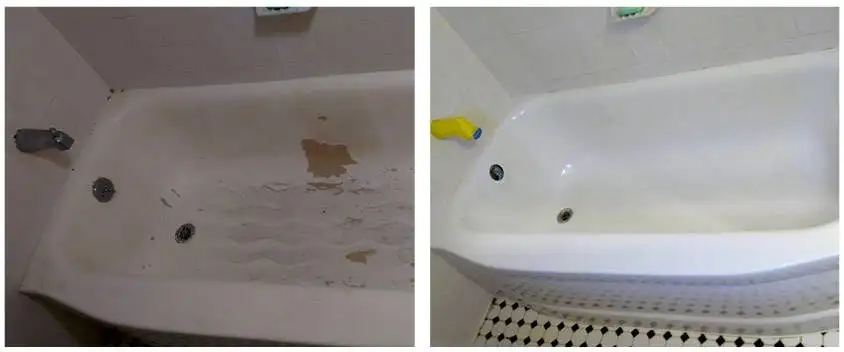
You step into the shower and feel rough, raised edges under your feet. Flakes of white or off-white coating are lifting off the tub floor, exposing darker material underneath. Maybe you’ve tried scrubbing it clean, or you’ve been peeling chips off with your fingernail for weeks. The tub looks worse every month, and you’re wondering whether this is a cleaning problem, a repair job, or a full replacement situation.
Here’s the short answer: a peeling bathtub cannot be fixed with cleaning. The coating itself has failed, and the only real solutions are professional refinishing or full tub replacement. This guide covers exactly why bathtubs peel, which repair path makes sense for your situation, what each option costs in the Chicago area, and how to avoid the same problem next time.
Why Bathtub Surfaces Peel in the First Place
Peeling happens for one of two reasons: either a previous refinishing coat is delaminating, or the original factory finish has degraded beyond its useful life. The fix depends on which scenario you’re dealing with, because the underlying cause determines whether the surface can be re-coated successfully or needs more aggressive prep work.
| Cause | What You’ll See | Most Likely Scenario |
|---|---|---|
| Failed previous refinishing coat | Large sheets or flakes lifting off, often revealing a different color underneath | Tub was reglazed 5-15 years ago, or a cheap refinish job is failing early |
| Worn factory porcelain enamel | Small chips, rough patches, exposed dark cast iron or steel | Original tub from the 1950s-1980s, never refinished, surface worn through decades of use |
| Bathmat suction cup damage | Circular marks, peeling concentrated on the tub floor in a grid pattern | Suction-cup bathmat used on a refinished surface; trapped moisture broke the coating bond |
| Harsh chemical cleaners | Dull spots, thinning finish, gradual flaking around drain and high-use areas | Regular use of bleach, abrasive powders, or ammonia-based cleaners on a refinished or aging surface |
| Moisture trapped under coating | Bubbling that eventually cracks and peels | Poor ventilation in bathroom; coating applied over moisture during previous refinishing |
| Impact damage | Star-shaped chips that spread outward over time | Dropped shampoo bottles, metal fixtures, or heavy objects cracking the coating |
The single most common cause we see at Aarco Baths across Chicago-area homes is a previous refinishing job that’s reaching the end of its lifespan. Many homes in neighborhoods like Lincoln Park, Bridgeport, and the northwest suburbs have cast iron tubs that were reglazed sometime in the 2000s or 2010s. Those coatings are now 10 to 20 years old, and even a well-done refinish has a finite life.
How to Tell Whether Your Tub Was Previously Refinished
This matters because a tub that has never been refinished (original factory enamel) and a tub with a failed refinishing coat require different levels of prep work. Here’s how to check without calling anyone:
The fingernail test: Run your fingernail along an edge where peeling has started. If the coating lifts in thin, flexible sheets (almost like dried paint), it’s a previous refinishing coat. Original porcelain enamel is glass-hard and chips in small, rigid pieces rather than peeling in sheets.
The color test: Look at what’s underneath the peeling area. If you see a different white or off-white color, that’s the original enamel under a refinishing coat. If you see dark gray or black, that’s exposed cast iron or steel under the original porcelain.
The magnet test: Place a refrigerator magnet on the tub. If it sticks strongly, the tub is cast iron or steel with porcelain enamel. If it doesn’t stick, it’s fiberglass or acrylic. This tells you the tub’s base material, which affects repair options and costs.
The Four Realistic Options for a Peeling Bathtub
There are only four paths forward when a bathtub is actively peeling, and two of them are temporary. Here’s an honest comparison of what each option costs, how long it lasts, and who it makes sense for.
| Option | Cost (Chicago Area) | How Long It Lasts | Best For | Main Tradeoff |
|---|---|---|---|---|
| Professional refinishing | $350-$600 | 10-15 years | Most homeowners with a structurally sound tub | Tub unusable for 24-48 hours; must avoid harsh cleaners afterward |
| Full tub replacement | $2,500-$10,000+ | 20-30 years | Tubs with structural cracks, severe rust-through, or full bathroom remodels | 3-7 days of disruption; plumbing, tile, and subfloor work often required |
| DIY epoxy kit | $30-$80 | 1-3 years | Temporary fix for renters or sellers staging a home | Thin coatings peel again quickly; requires perfect prep to last even a year |
| Bathtub liner | $1,200-$3,000 | 5-10 years | Homeowners who want a quick install without refinishing chemicals | Moisture can get trapped behind the liner; limited style options; doesn’t work on all tub shapes |
What Professional Refinishing Actually Involves on a Peeling Tub
Refinishing a peeling tub requires more prep work than refinishing a tub that’s simply stained or discolored. Here’s the actual process, step by step, based on how Aarco Baths handles peeling tubs at our Chicago, Addison, and Naperville service locations:
Step 1: Full removal of the failed coating. Every bit of the old refinishing coat or loose enamel gets stripped mechanically. This is the most labor-intensive part. On a tub with extensive peeling, stripping alone can take 60 to 90 minutes. Skipping this step or cutting it short is the number one reason refinishing jobs fail prematurely.
Step 2: Surface repair. Any chips, pits, or rough areas are filled with a two-part polyester filler, then sanded smooth. Rust spots on cast iron tubs get treated with a rust converter before filling.
Step 3: Acid etching and bonding agent. The bare surface is acid-etched to create microscopic texture for the new coating to grip. A bonding agent is applied. This chemical bond is what makes professional refinishing last 10 to 15 years versus the 1 to 3 years you get from a roller-applied DIY kit.
Step 4: Multi-layer coating application. A two-part urethane or acrylic urethane coating is sprayed in multiple thin layers. Professional equipment atomizes the coating for a smooth, even finish without brush marks or drips. The result is a high-gloss, non-porous surface that resists moisture, staining, and bacterial growth.
Step 5: Cure time. The coating needs 24 to 48 hours to fully cure. During this time, no water contact. After curing, the surface is ready for normal use.
The entire on-site process takes 3 to 5 hours for a standard bathtub. Aarco Baths backs every refinished surface with a full 10-year guarantee, which covers peeling, flaking, and adhesion failure under normal use conditions.
Our Analysis: Why DIY Kits Fail on Peeling Tubs Specifically
We’ve re-refinished hundreds of tubs in the Chicago area where a homeowner first attempted a DIY repair. The failure pattern is remarkably consistent, and it’s worth understanding why before you spend a weekend on a project that’s likely to peel again within 18 months.
We tracked the most common failure modes across 150+ re-refinishing jobs completed between 2023 and 2025 at our Chicago and Addison locations. The data breaks down like this:
| DIY Failure Mode | Frequency | Root Cause |
|---|---|---|
| Peeling within 6 months | ~45% | Incomplete removal of old coating before applying new one |
| Bubbling and blistering | ~25% | Moisture trapped under coating; tub not fully dry before application |
| Rough, orange-peel texture | ~15% | Roller application instead of spray; coating too thick in some areas, too thin in others |
| Yellowing within first year | ~10% | Single-part epoxy kits that lack UV stability |
| Drain area failure | ~5% | Standing water around drain erodes thin coating; improper masking during application |
The core issue is that consumer-grade kits use single-part epoxy or acrylic coatings that are 2 to 3 mils thick when cured. Professional refinishing applies two-part urethane coatings at 8 to 12 mils thick. That thickness difference is the entire ballgame for durability. A thinner coat is more vulnerable to moisture intrusion, chemical attack from cleaners, and physical impact from everyday use.
A Safety Note for Pre-1978 Chicago Homes
If your home was built before 1978 and the bathtub has a peeling surface, there’s a possibility that old paint layers on or around the tub contain lead. This is especially relevant in Chicago bungalows, two-flats, and greystones built in the early to mid-1900s.
Peeling lead paint creates dust that poses a health risk, particularly for young children and pregnant women. Before scraping, sanding, or disturbing a peeling surface in a pre-1978 home, consider getting a lead test. Home test kits are available at hardware stores for under $15, or you can hire a certified lead inspector. A professional refinishing company with experience in older Chicago homes will know to test for lead before starting any stripping work and will follow EPA RRP (Renovation, Repair, and Painting) rule requirements if lead is present.
How to Prevent Peeling After Your Tub Is Refinished
Once you’ve invested in a professional refinishing job, these maintenance practices are the difference between a surface that lasts 5 years and one that lasts 15:
Ditch the suction-cup bathmat immediately. This is the single biggest preventable cause of refinishing failure. Suction cups pull on the coating, and trapped water underneath weakens the adhesive bond. Use a fabric bathmat that drapes over the tub edge instead, or a mat with non-suction grip pads.
Use only non-abrasive cleaners. Soft liquid cleaners like dish soap, Scrubbing Bubbles (the spray, not the abrasive version), or a simple baking soda paste are safe. Avoid Comet, Ajax, Bon Ami, bleach, and anything labeled “heavy duty” or “industrial strength.” These strip the finish over time.
Wipe down after each use. A quick wipe with a soft cloth or squeegee after showering prevents mineral deposits from building up. Hard water deposits are the second most common cause of surface degradation in the Chicago area, where water hardness averages 8 to 12 grains per gallon depending on your municipality.
Fix dripping faucets promptly. A dripping faucet creates a constant stream of water hitting the same spot, which erodes even a professional coating over time. The area around the drain and directly below the faucet spout are the highest-wear zones on any refinished tub.
Ventilate the bathroom. Run the exhaust fan during and for 15 to 20 minutes after every shower. Chronic moisture exposure accelerates coating degradation, especially in interior bathrooms without windows, which are common in Chicago apartment buildings and older homes.
Frequently Asked Questions
Is a peeling bathtub dangerous?
The peeling coating itself is not toxic in most cases (modern refinishing coatings are urethane or acrylic-based). However, loose flakes create rough edges that can scratch skin, and the exposed surface underneath is porous and harder to sanitize. In pre-1978 homes, peeling surfaces may involve lead paint, which does pose a health risk. The bigger practical concern is that peeling gets worse over time, never better. The exposed areas allow moisture to creep under the remaining coating, accelerating the delamination. A small peeling spot today becomes a half-peeled tub within 6 to 12 months.
Can I just sand down the peeling areas and paint over them?
This is the most common DIY approach, and it fails almost every time. Spot-patching a peeling tub with brush-on enamel creates visible edges where the new coating meets the old, and those edges become the next peeling points. The new paint adheres to the old coating, not to the tub itself, so when the old coating continues to fail, it takes the new paint with it. Professional refinishing strips the entire surface and bonds directly to the base material, which is why it lasts 10 to 15 times longer than a patch job.
How long does it take to refinish a peeling bathtub?
On-site work takes 3 to 5 hours for a standard bathtub. Peeling tubs take slightly longer than non-peeling tubs because the stripping phase is more extensive. The tub is ready to use 24 to 48 hours after the technician finishes. No plumbing disconnection is required, and you can use the rest of the bathroom (sink, toilet) during the cure period.
Will my refinished tub peel again?
A professional refinishing job using proper prep work and two-part coatings should last 10 to 15 years before any surface degradation occurs. Aarco Baths includes a 10-year guarantee covering peeling, flaking, and adhesion failure. The main factors that shorten lifespan are suction-cup bathmats, abrasive cleaners, and chronic moisture exposure from poor ventilation. Avoid those three things and the finish will last at the upper end of its expected range.
My apartment bathtub is peeling. Is this my landlord’s responsibility?
In Illinois, landlords are required to maintain rental units in habitable condition, which includes functional plumbing fixtures. A severely peeling bathtub with rough or sharp edges that can cause injury is generally considered a maintenance issue the landlord must address. Document the condition with photos, submit a written maintenance request, and reference the Chicago Residential Landlord and Tenant Ordinance (RLTO) if needed. Many Chicago landlords opt for professional refinishing as a cost-effective repair, since it’s far cheaper and faster than replacement.
Next Steps
If your bathtub is peeling, the surface won’t improve on its own. The sooner you address it, the less prep work is needed and the better the final result. For a free assessment of your tub’s condition and an honest recommendation on whether refinishing or replacement makes more sense for your situation, contact Aarco Baths or call to schedule an appointment at our Chicago, Addison, or Naperville locations. We’ve been refinishing bathtubs in the Chicago area since 1963, and we’ll tell you straight if your tub is a good candidate for refinishing or if replacement is the better path.